Components of the Slasher Film
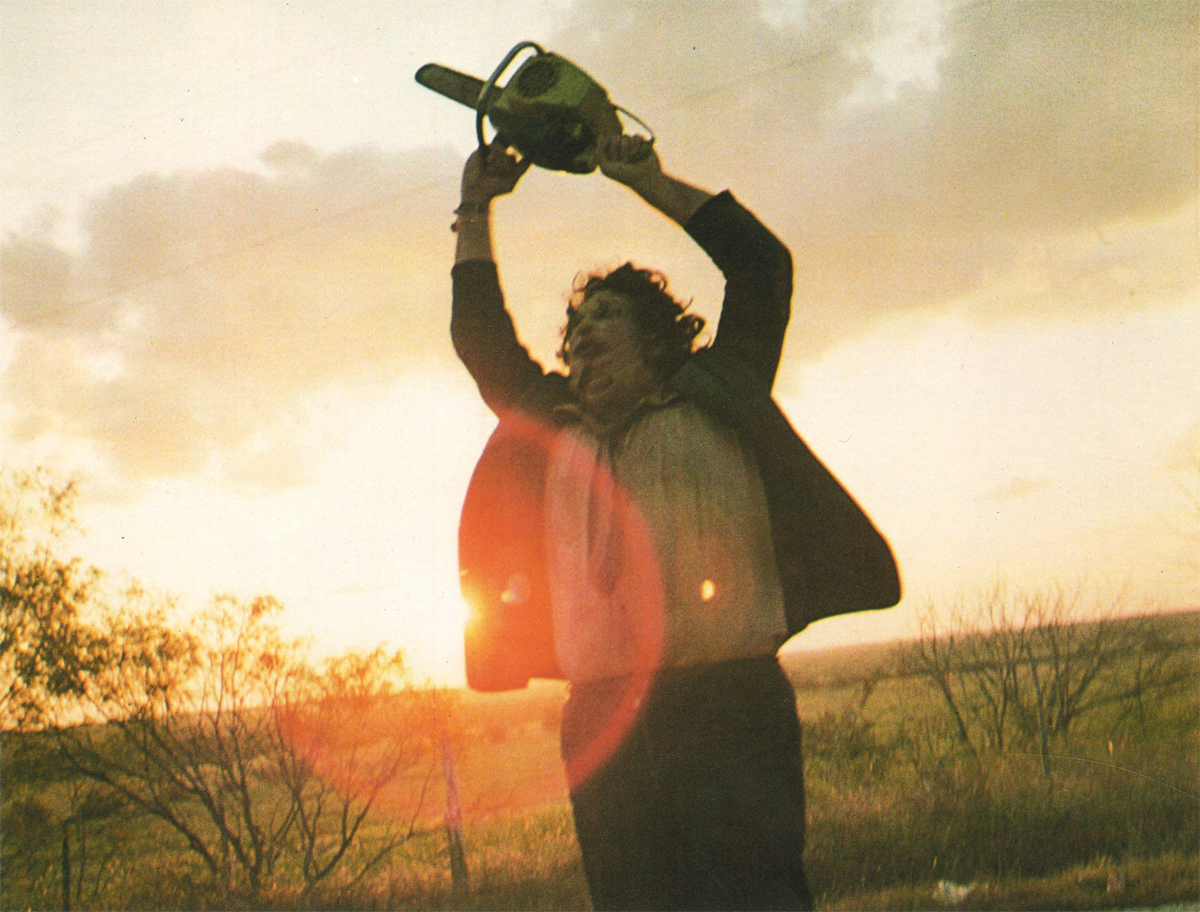
The Killer
The killers in slasher films, almost always men, are "vaguely supernatural," usually in an effort to ensure sequels for economic viability.3Adam Rockoff, Going to Pieces: The Rise and Fall of the Slasher Film, 1978-1986 (Jefferson: McFarland & Company, 2001), 6. They are more often than not masked and their identity is revealed toward the end of the movie. Rockoff contended that the killers are, with few exceptions, "overtly asexual" with the exception of brief bouts of voyeurism towards the sexual immorality practiced by their future victims. While Clover did not necessarily dispute Rockoff, she noted gender confusion and troubled childhoods as frequent attributes of the killers' identities.
Six-year-old Michael Meyers in Carpenter's 1978 Halloween killed his teenager sister after witnessing her rather quick fornication with her male friend. A cannibalistic family supposedly without a matriarch raised Leatherface, the killer in Tobe Hooper's 1974 Texas Chainsaw Massacre. "Even killers whose childhood is not immediately at issue," Clover analyzed, "and who display no overt gender confusion are often sexually disturbed."4Carol Clover, Men, Women, and Chainsaws: Gender in the Modern Horror Film (Princeton: Princeton University Press, 1992), 28. For example, in Wes Craven's 1984 A Nightmare on Elm Street, Freddy Krueger returns from the dead after being lynched by members of his town for being a child molester and murderer. Dika and Rockoff both alienated this former trauma as a separate feature, but like Clover, this as an integral part of the killer's identity.
Video Examples
The first scene below is the opening of Halloween (1978). Note Michael Myer's displeasure with his sister's sexual activity. The second scene, from A Nightmare on Elm Street (1984), describes the origin story of Freddy Krueger, a child murderer who became a victim of vigilante justice.